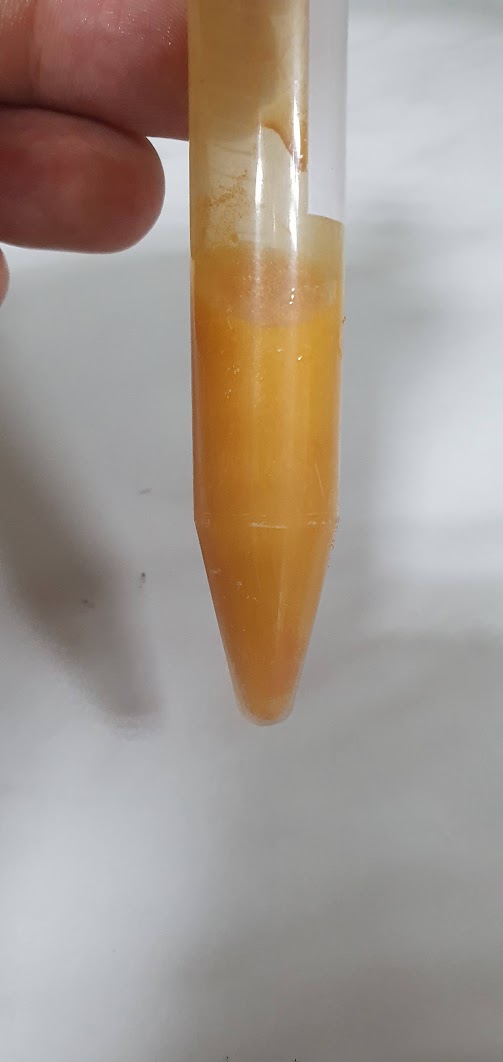
Photocatalytic Properties of 2D Chalcogenide Nanomaterials
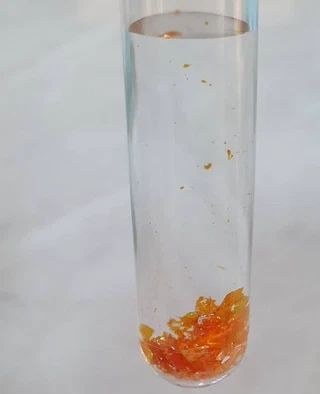
As a research engineer in the Young Researchers Project (#25.80012.5007.38TC) at the National Center for Materials Study and Testing (NCMST), my work focuses on the experimental development, structural modification, and automation of synthesis platforms for tin-based 2D chalcogenides targeted at environmental applications.
The Challenge: Scalable & Controlled Exfoliation of 2D Nanosheets
Transition metal dichalcogenides and monochalcogenides (like $\text{SnS}$ and $\text{SnS}_2$) hold immense potential for solar energy conversion and water purification due to their unique bandgap architectures. However, transitioning from bulk layered crystals to high-quality, few-layer 2D nanosheets presents major engineering bottlenecks:
- Inconsistent Nanosheet Thickness: Standard liquid-phase exfoliation protocols often suffer from poor reproducibility, leading to high polydispersity in layer count.
- Lack of Parameter Control: Commercial sonication equipment lacks open interfaces to strictly regulate acoustic energy density, power pulses, and temperature drift during long processing cycles.
- Structural Degradation: Excessive or unoptimized ultrasonic stress can fracture the lateral size of the nanosheets instead of cleanly shearing the weak Van der Waals forces between the layers.
Engineering & Research Solution
To address these challenges, my contribution bridges mechanical automation with advanced chemical processing by designing custom laboratory hardware to tightly govern the sonochemical environment.
1. Custom Ultrasound Sonication System Design
A significant phase of this project involves developing and fine-tuning an automated sonication platform:
- System Design & Integration: Building and adapting a custom ultrasound sonication setup equipped with localized monitoring sensors.
- Sonochemical Optimization: Adjusting acoustic amplitudes, custom pulse-width modulation (PWM) timing, and precise duty cycles to maximize mechanical shear stress while minimizing layer structural defects.
- Thermal Management: Controlling energy-dissipation parameters to maintain a constant temperature, preventing the agglomeration of freshly exfoliated nanosheets.
2. Investigated 2D Materials & Morphological Analysis
The automated exfoliation system is utilized to isolate and study two distinct material profiles for environmental photocatalysis:
- SnS (Tin Monosulfide): Investigating its narrow bandgap properties ($1.1\text{–}1.3\text{ eV}$) for broad-spectrum solar absorption.
- SnS₂ (Tin Disulfide): Evaluating its wide bandgap ($2.1\text{–}2.4\text{ eV}$) and optimized band-edge alignment for efficient organic pollutant degradation under visible light irradiation.
Ongoing Objectives
As an active core investigation, current operational milestones are focused on:
- Improving Exfoliation Yield: Minimizing atomic layer thickness to maximize active surface areas while preserving large lateral dimensions.
- Advanced Structural Diagnostics: Mapping the nanomaterials’ layer crystallinity and defect densities using X-ray Diffraction (XRD) and Raman spectroscopy.
- Photocatalytic Reactivity Testing: Quantifying the decomposition efficiency of target organic dyes and chemical contaminants under simulated solar radiation.